Robots are increasingly ubiquitous, prompting a critical question: will they soon dominate the job market? Advances in artificial intelligence enable autonomous machines to recognize images, process text and speech, handle orders, and assist customers—tasks traditionally performed by humans. For years, companies have integrated robots into operations for their speed, reliability, and tireless performance. A Bloomberg report highlights how the pandemic and resulting labor shortages have accelerated this shift, with businesses turning to automation more than ever.
A Federal Reserve survey reveals that about one-third of U.S. companies struggling with hiring are adopting or exploring automation to offset worker shortages. David Zapico, CEO of Ametek Inc., a leading provider of industrial automation equipment, notes his company is operating at full capacity. "People want to take out work," he stated. Executives at Domino's Pizza and Hormel Foods Corp. have also shared with Bloomberg their investments in automation to cut labor costs.
McDonald's recent partnership with IBM aims to deploy AI at drive-thrus, potentially reducing staff needs. Boston Dynamics' robot dogs, already aiding the U.S. military and police, handle agricultural duties, monitor construction sites, and even assessed radiation at Chernobyl. These examples share a common thread: tasks that are tedious, hazardous, or labor-intensive.
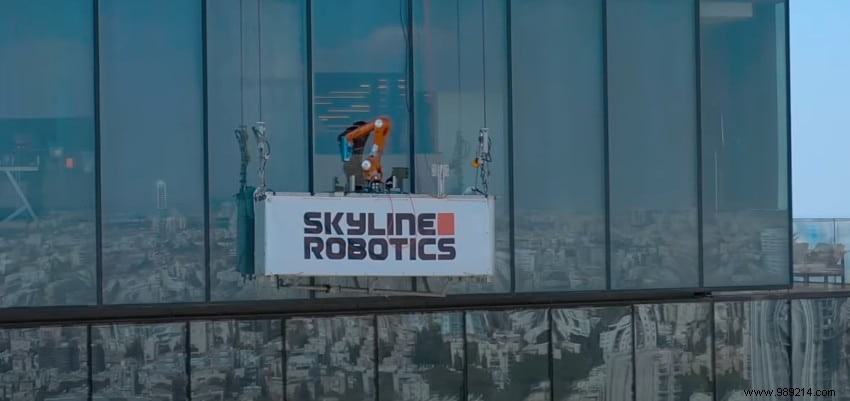
Robotics has entered homes too, with robot vacuums, window cleaners, lawn mowers, and pool cleaners eliminating repetitive, unpleasant chores. This can enhance safety and well-being, as seen with Skyline Robotics' Ozmo, which cleans high-rise windows in New York, sparing workers from perilous heights.
However, many routine manual jobs are held by those without access to more rewarding roles due to limited opportunities or skills. If trends persist, MIT economist Daron Acemoglu warns, "inequalities will increase, and the outlook for many low-educated workers will not be very good."
Brain Corp's CEO Eugene Izhikevich envisions robots as commonplace as smartphones, making life safer and simpler. Their BrainOS-powered autonomous mobile robots (AMRs) navigate public spaces, avoid obstacles, and adapt dynamically. Over 16,000 units are deployed, cleaning floors, delivering goods, and inventory-scanning shelves—equivalent to 6.8 million human work hours. Izhikevich aims to cover "100 billion square feet" with his fleet.
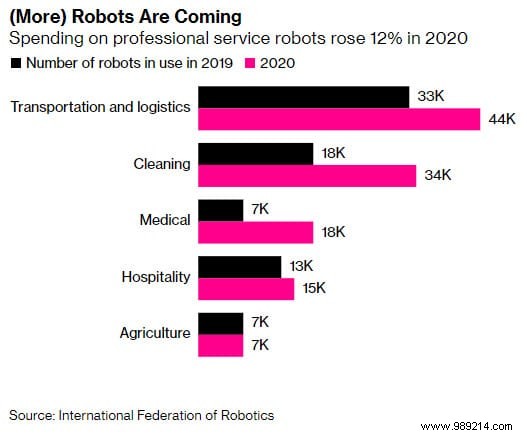
The AMR market grew 27% in 2019. Post-pandemic, adoption surged from October 2020 to 2021, especially in hospitals (+2500%) and education (+426%), driven by labor shifts, pandemic pressures, and AI advancements.
Early 2000s self-checkouts in European stores sparked fears, yet today they're consumer favorites for speed, with cashiers handling complex transactions. Amazon Go's cashless stores in the UK reignite concerns: is cashiering obsolete?
A 2013 Oxford Martin School study predicted 47% of U.S. jobs at risk within 20 years. A 2016 OECD analysis pegged it at one in ten across industrialized nations. Sorbonne economist Gregory Verdugo cautions, "Who can predict what will be technically automatable?" These figures are speculative.
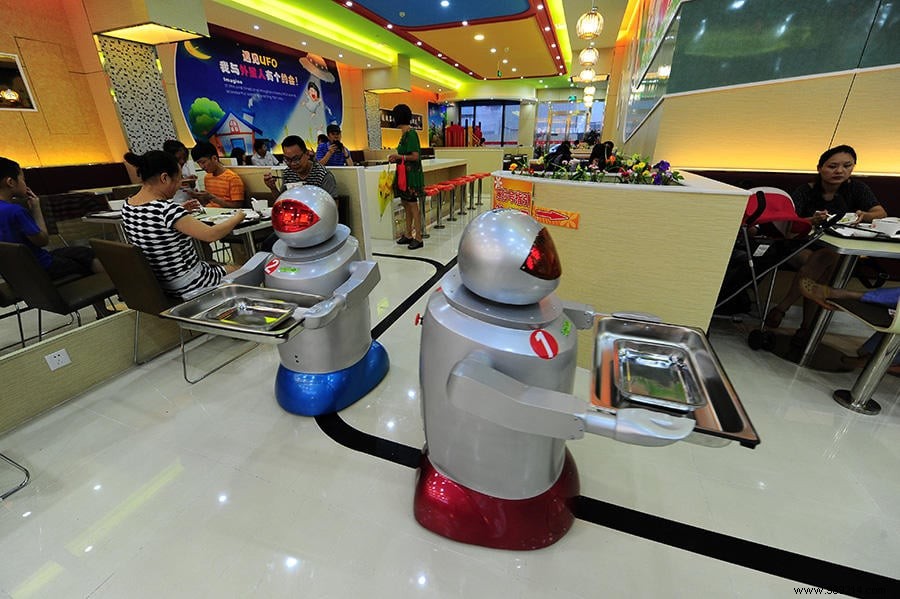
Robots now cook pizzas, fry fast food, pick fruit (Tevel drones), and even administer needle-free vaccines (Cobionix). Even cognitive tasks like translation, financial advice, scriptwriting, and graphic design are increasingly AI-driven. "Funny thing is that everyone thinks it can't be replaced by a machine, but in the long run, we'll all end up doing it," says École Normale Supérieure researcher Serge Abiteboul.
Economist Gilles Saint-Paul argues any task can be decomposed into automatable routines: "Once you understand a task well, all of them can become routine."
Automation boosts productivity without necessarily eliminating jobs. French economist Alfred Sauvy's 'spillover theory' posits that lower prices from efficiency spur consumption and new roles—as horses to cars created auto industries. Verdugo notes, "There is no economic model that guarantees it, but so far technological innovation has never killed jobs." A 2020 Statistics Canada report shows robot-using firms hired 15% more workers. Humans will oversee robots for ethics and liability, though ratios may reach 1:500 long-term.
Yet, the OECD stresses no 'communicating vessels' effect: skills for lost jobs don't transfer easily to new ones. A 2019 French Senate report warns of 'deskilling,' even for qualified roles like radiologists or pilots. Automation may not destroy jobs but could exacerbate inequality.
