Industrial robots, programmable for hazardous, complex, or repetitive tasks, deliver unmatched precision and accuracy across industries. Available in diverse models differentiated by arm reach, payload, and up to six axes of movement, they form the core of industrial robotics.
In production and material handling, robots use end-of-arm tooling (EOAT) to grip and manipulate tools or parts. Precise actions are orchestrated through advanced programming software and commands.
Capable of 24/7 operation with hazardous materials in harsh environments, they free workers for higher-value roles. Robotics drives productivity and profitability while minimizing injury risks from labor-intensive tasks. A Lyon-based special machines manufacturer showcases this evolution in automated manufacturing.
Versatile industrial robots handle everything from car doors to eggs with speed, power, skill, and sensitivity. Key applications include pick-and-place from conveyors to packaging, and machine tending—feeding raw materials into injection molders, CNC grinders, lathes, and presses.
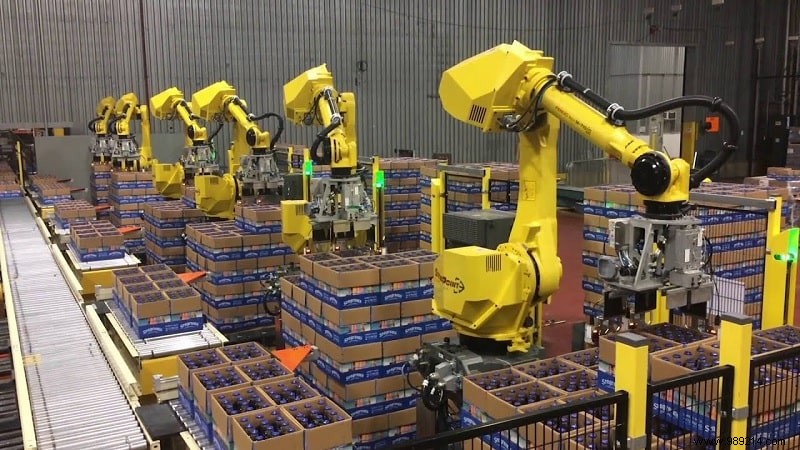
Robotic palletizers stack corrugated boxes or packaged goods in stable patterns using fixed or gantry systems with specialized tooling. Common types: in-line or layer forming, depalletizing, and mixed-box handling.
For safety, robots operate laser, plasma, and water jet cutters, programming hundreds of paths for superior flexibility and precision over dedicated machines.
Multi-axis robots excel at grinding, cutting, honing, polishing, and cleaning parts of any material for consistent finishes. In sealing, they apply glue or sealant along precise trajectories with controlled speed for uniform beads—vital in automotive window sealing and box packaging.
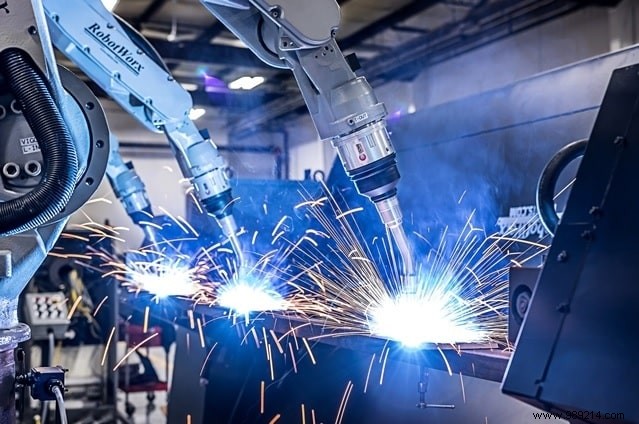
Spray painting robots, with slender arms for fluid access, minimize exposure to volatile paints. Welding robots perform bead (MIG, TIG, arc, laser) and spot welds with exact control over power, wire feed, and gas flow.
