The term "metaverse"—a blend of "meta" and "universe"—was coined by acclaimed American science fiction author Neal Stephenson in his groundbreaking 1992 novel Snow Crash (French title: The Virtual Samurai). It envisions a dystopian future where characters escape into a vast virtual reality realm, navigating through personalized avatars.
This concept offers a preview of an Internet evolved through virtual reality: a persistent, fictional 3D world made up of interconnected spaces inhabited by user-controlled avatars. Though Stephenson introduced the idea three decades ago, the metaverse has surged back into prominence since Meta CEO Mark Zuckerberg announced ambitious plans to build it.
Meta (formerly Facebook) has backed its vision with action, including the creation of 10,000 jobs in Europe focused on this project—particularly developing virtual and augmented reality devices essential for metaverse access. Zuckerberg predicts VR headsets will become as commonplace as smartphones. But what precisely is this "maximalist, interconnected experience" at the heart of Meta's metaverse?
At its core, the metaverse comprises interconnected 3D virtual spaces forming a unified universe. Crucially, these spaces are persistent—distinguishing it from most multiplayer games with temporary instances. Emerging technologies like extended reality, AI, blockchain, computer vision, cloud computing, video conferencing, live streaming, and next-gen mobile networks are accelerating this shift from today's web to tomorrow's immersive landscape.
The metaverse enables users to "live" through avatars in autonomous, enduring, shared environments where human social interactions take center stage. It's not a game or owned by one company; envision it as a 3D evolution of the global Internet, with fully interoperable services delivering total immersion. Users can work, attend concerts, or pursue hobbies—just as in the physical world.
Picture creating a document in Microsoft Word, emailing it via Gmail, and viewing it on an iPad: metaverse elements must similarly transfer across platforms, preserving value and functionality. The Open Metaverse Interoperability Group champions this vision, ensuring seamless avatar transitions between metaverses, much like browsing the web without switching browsers.
The metaverse echoes multiplayer online games with shared, interactive worlds. Second Life, launched in 2003, came closest early on: a user-built 3D universe where avatars buy goods (using convertible Linden dollars), trade services, and host events. At its height, it boasted nearly a million active users; Duran Duran even held concerts and built dedicated spaces in 2006.
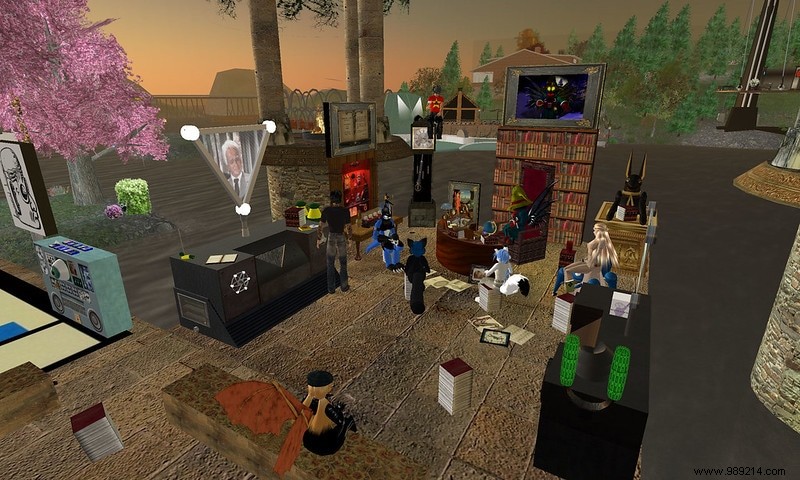
Linden Lab handles graphics and infrastructure, but post-2007 challenges like the subprime crisis led to decline—though it persists with 800,000 monthly logins reported in 2019.
Roblox creator David Baszucki sees it as a metaverse frontrunner. This 2004 sandbox lets users build and share games. "Just as mail, telegraph, phone, text, and video enable collaboration, Roblox and the metaverse will become vital for business," he told the New York Times. Roblox acquired avatar specialist Loom.ai in 2020 and hit 202 million monthly users in April 2021.
Epic Games' Tim Sweeney, behind Fortnite, is all-in too. Fortnite hosts concerts (like Ariana Grande's for millions) and movie-tie-in skins. Sweeney envisions car demos or virtual try-ons bridging digital and physical shopping.
Immersed via VR/AR gear—not screens—these experiences herald the metaverse reality.
Big tech and investors are racing to claim metaverse stakes. Meta's journey began with its $2 billion 2014 Oculus VR acquisition; Oculus Quest 2 has sold over 5 million units since 2020, shattering records. A superior successor looms.
At Meta's October 28 annual conference, Zuckerberg outlined a blended AR/VR realm for avatar interactions—virtual offices for work, Marketplace for digital goods.
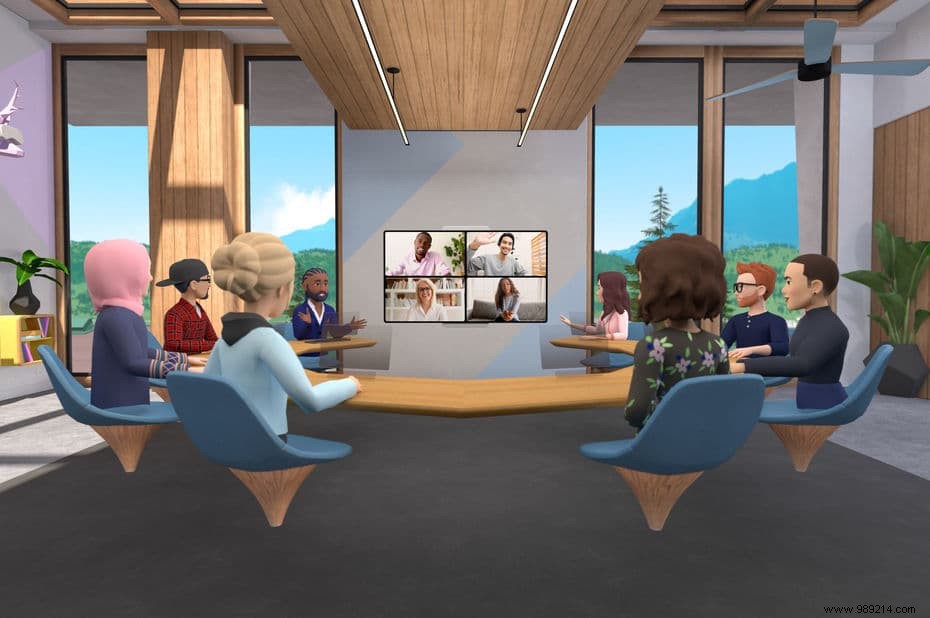
Key apps include Horizon Worlds (replacing 2017's Facebook Spaces), Horizon Workrooms (up to 16 avatars collaborating), and upcoming Horizon Home for customizable VR socializing. Meta is methodically constructing its metaverse foundation.
Meta's 2.85 billion monthly and 1.88 billion daily users in Q1 2021 position it for massive metaverse scale—but full realization may take 10-15 years, awaiting 5G and beyond for seamless connectivity.
Blockchain underpins this economy, with NFTs proving ownership of digital assets. Platforms like Decentraland use Ethereum for virtual land sales (e.g., Sotheby's replica galleries) via MANA tokens.
For immersive pursuits like concerts, galleries, or test drives, the metaverse shines; for routine tasks like Wikipedia searches or taxes, it may feel excessive.
