As artificial intelligence transitions from science fiction to everyday reality, scientists and ethicists urge us to consider its implications. Will AI pose risks to humanity? How might it reshape our lives in the next decade? One certainty: AI is coming, and soon. The real question is, what will it truly look like?
Hollywood has long depicted AI in movies with a mix of fascination and fear—from benevolent robots to apocalyptic threats. Yet these portrayals often stray into fantasy, blurring lines between humans and machines long before technology allows.
AI has dominated films more than TV, appearing in standalone episodes rather than series premises. Tropes like indistinguishable androids or AIs yearning for humanity persist, despite us not yet passing the Turing Test—a benchmark for machine intelligence first proposed by Alan Turing.
Standouts include HAL 9000 from 2001: A Space Odyssey (inspired by 1960s computer science hypotheses) and Sonny from I, Robot (rooted in Isaac Asimov's Three Laws of Robotics). These grounded depictions, drawn from visionary authors, offer blueprints for realistic AI storytelling.
Contrast that with Her, where an AI operating system feels indistinguishably human, or Interstellar's TARS, whose wit feels plausible amid physical exaggerations.
The reimagined Battlestar Galactica features primitive robotic Cylons and advanced humanoid ones, blending AI with human-like traits. Praised for character-driven drama over effects, it grapples with identity: "Cylons look like us—are they truly different?" Familiar themes, but elevated by strong storytelling.
This British-American series, remade from Sweden's Real Humans, envisions a near-future where "synths"—humanoid androids—integrate into society. The blurring lines spark ethical debates on consciousness and rights. While not groundbreaking philosophically, it's compelling and entertaining.
Created by Jonathan Nolan (brother of Christopher Nolan), Person of Interest excels in realism. Spoiler warning: After 9/11, billionaire Harold Finch builds "The Machine," a vast surveillance AI predicting crimes via social security numbers—victim or perpetrator unclear.
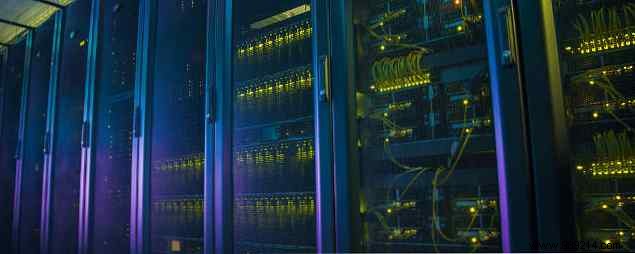
The Machine is a massive server cluster, not a chatty pocket device. It communicates via numbers, adheres to strict directives, and never anthropomorphizes unrealistically. This plausible supercomputer anchors a thrilling mix of action and conspiracy.
The anthology series Black Mirror tackles tech dystopias, with Season 2's "Be Right Back" standing out. A grieving woman revives her late partner via an AI trained on his digital footprint—emails, social media. Speculative yet rooted in emerging data-analysis tech, it probes emotional fallout.
In a world of tech-heavy media, Person of Interest and Black Mirror honor AI's potential without exaggeration. As robots advance in creativity and jobs, these shows prepare us for what's next—dystopia or progress?
Seen realistic AI on TV? What future depictions ring true? Share in the comments!
