Glass-bottomed bridges and walkways are booming worldwide as major tourist draws. A recent incident outside China's Longjing city saw one collapse amid winds exceeding 100 km/h, endangering a visitor. Are these structures truly safe, or is their apparent fragility a real risk?
High winds of up to 150 km/h shattered a glass-bottomed bridge near Longjing, trapping a man 91 meters above ground. Similar attractions, from London's Tower Bridge glass floor to Arizona's Grand Canyon Skywalk, are increasingly popular. Should safety concerns deter visitors?
Paul Bingham, a materials physicist at Sheffield Hallam University in the UK, has no qualms about walking on them—except in gusty conditions. "Designers and architects must carefully select materials, but people shouldn't worry," he says.
Bingham highlights glass's two key vulnerabilities as a construction material: its inherent brittleness and lack of crystalline structure, which allows surface cracks to propagate unchecked. Ongoing research minimizes surface defects, as pristine glass is far stronger than scratched or dust-exposed surfaces.
Advanced methods produce the toughened glass likely used in the Longjing bridge. One approach coats glass with polymers matching its refractive index, preventing light distortion while shielding against defects.
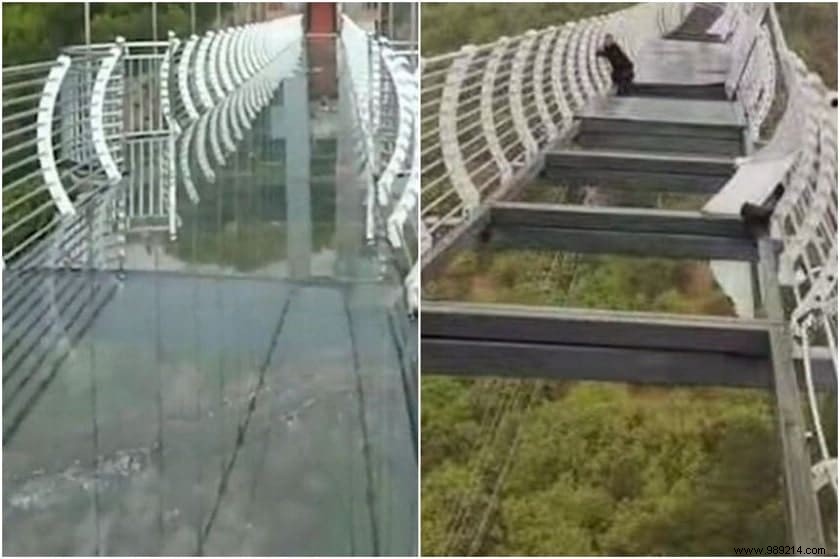
Manufacturers often laminate flexible polymer layers between glass sheets, ensuring integrity even if one pane fails. Bingham notes the bridge's glass was probably coated, laminated, and tempered—boosting strength and causing breakage into harmless granules rather than sharp shards.
Tempering compresses outer surfaces while stretching the core, achievable chemically (via potassium nitrate baths swapping sodium for larger potassium ions) or thermally (rapid surface cooling). This seals micro-defects, halting crack growth.
While manufacturing flaws could theoretically cause failure, Bingham deems it unlikely. More plausibly, the extreme winds overloaded the structure under pedestrian load. Overall, he affirms glass bridges are safe when properly designed.
